
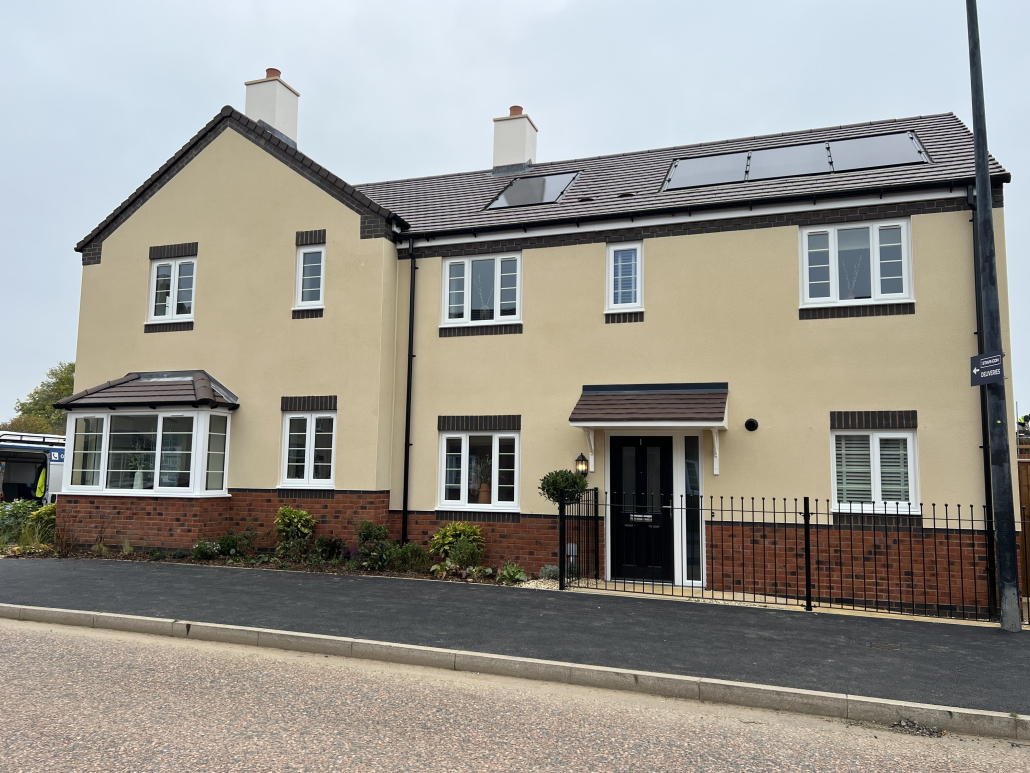
Are new builds more energy efficient?
One of the biggest priorities for house hunters today is energy efficiency, helping to reduce both energy consumption and household bills. With 87% of new builds achieving an EPC rating of A or B, and emitting up to 74% less carbon each year than the average older home, new build homeowners can benefit from significant energy cost savings (HBF figures February 2026).
Here, we explore just what contributes to a more energy efficient home, what buyers can expect and how to check the efficiency of your new home.
What makes new builds energy efficient?
- At a glance: Airtight construction that prevents draughts
- High performance glazing to lessen heat loss from windows
- Advanced insulation in walls, floors and roofs to retain warmth
- Low carbon heating through air source heat pumps, for example
- Smart energy monitoring
From the foundation to the roof, modern developers utilise energy efficient house features designed to drastically reduce heat loss and lower carbon emissions. Unlike older properties that rely on retrofitting, a new build has sustainability woven directly into its structural DNA. Here is a look at the core components that make these properties so eco-friendly:
Modern insulation standards
Unlike Victorian or mid-century properties, an energy efficient new build features high-specification cavity wall insulation, deep loft insulation, and underfloor thermal barriers. These features trap heat inside the property, meaning your heating system doesn’t have to work overtime to maintain a comfortable temperature.
Triple/modern double glazing
Windows are notoriously responsible for heat loss in older properties. New builds utilise advanced double or triple glazing filled with argon gas, paired with thermally broken frames. This drastically reduces cold spots and prevents draughts, while simultaneously offering superior acoustic insulation from the outside world.
Energy efficient heating systems
Say goodbye to outdated, inefficient boilers. Modern developments are increasingly shifting toward low-carbon heating systems. Technologies like Air Source Heat Pumps (ASHPs) and highly efficient modern combi-boilers require a fraction of the energy to heat your water and radiators, significantly slashing your carbon footprint.
Smart home tech
Improving energy management is seamless in a modern home. Smart thermostats, smart meters, and zone-controlled heating allow homeowners to track their energy usage in real-time and only heat the rooms they are actively using, eradicating wasted energy.
UK building regulations that improve efficiency
The new build homes being built today must follow strict UK statutory regulations. These legal requirements guarantee that developers are prioritising the planet – and your wallet.
Part L: This critical section of the UK Building Regulations dictates the conservation of fuel and power. It was significantly tightened in 2022 to mandate a 31% reduction in carbon emissions for new homes, with further stringent updates rolled out to bridge the gap toward total decarbonisation.
Future Homes Standard: This revolutionary framework requires all newly built homes to be future-proofed with low-carbon heating and world-class energy efficiency, ensuring no new homes rely on fossil fuel gas networks.
Requirements for low‑carbon heating: Under these evolving rules, the installation of traditional gas boilers is being phased out in favour of renewable alternatives like heat pumps and communal heat networks.
Real energy savings: What buyers can expect
Investing in energy efficient homes translates directly into tangible financial and lifestyle perks.
Average annual bill reductions: Statistics show that the average new build home (typically achieving an EPC rating new build of A or B) costs significantly less to run than an older property. While an older EPC D or E rated home faces soaring annual energy bills, new build owners can expect to save thousands of pounds a year on a like-for-like basis.
Reduced maintenance costs: Because everything from the radiators to the window seals are brand new and built to strict modern standards, you won’t have to worry about costly retrofitting or emergency boiler repairs for years to come.
Long‑term value and resale benefits: Energy efficiency is no longer a “nice-to-have” – it is a major selling point. Properties with high efficiency ratings hold their value incredibly well and are highly sought after by future buyers, safeguarding your investment.
How to check the energy efficiency of a new build
When purchasing a property, always check the credentials yourself and check in with your developer to confirm exactly how efficient the property is. You can verify this through:
Request the EPC (energy performance certificate): It rates the property from A (most efficient) to G (least efficient). Look for that coveted A or B rating.
SAP score: The Standard Assessment Procedure is the government’s official system for assessing the energy performance of dwellings. Your developer can provide this breakdown.
Developer specifications: Ask for a detailed fixture list detailing the U-values (heat loss rates) of the windows, insulation materials, and the specific models of the heating systems installed.
On‑site checks before completion: During your home demonstration or snagging walkthrough, verify that smart meters are installed and ask for a demonstration on how the low-carbon heating systems operate.
Should you choose a new build for better energy efficiency?
If minimising your carbon footprint and lowering your monthly outgoings are high on your priority list, the answer is a resounding yes. Thanks to cutting-edge construction methods, advanced energy efficient house features, and strict compliance with the Future Homes Standard, modern properties outperform older homes on every environmental metric.
As well as offering a fresh, modern living space, a new build is a smart financial choice – providing more predictable living costs and a healthier, warmer home for years to come.
Take a look at Motion Homes’ latest developments: https://motionhomes.co.uk/our-developments


